




We do not simply “see” the monuments as isolated objects: our approach is to connect them to one another, placing them within a coherent narrative and reading them as integral parts of a compact, powerful, and layered urban organism.
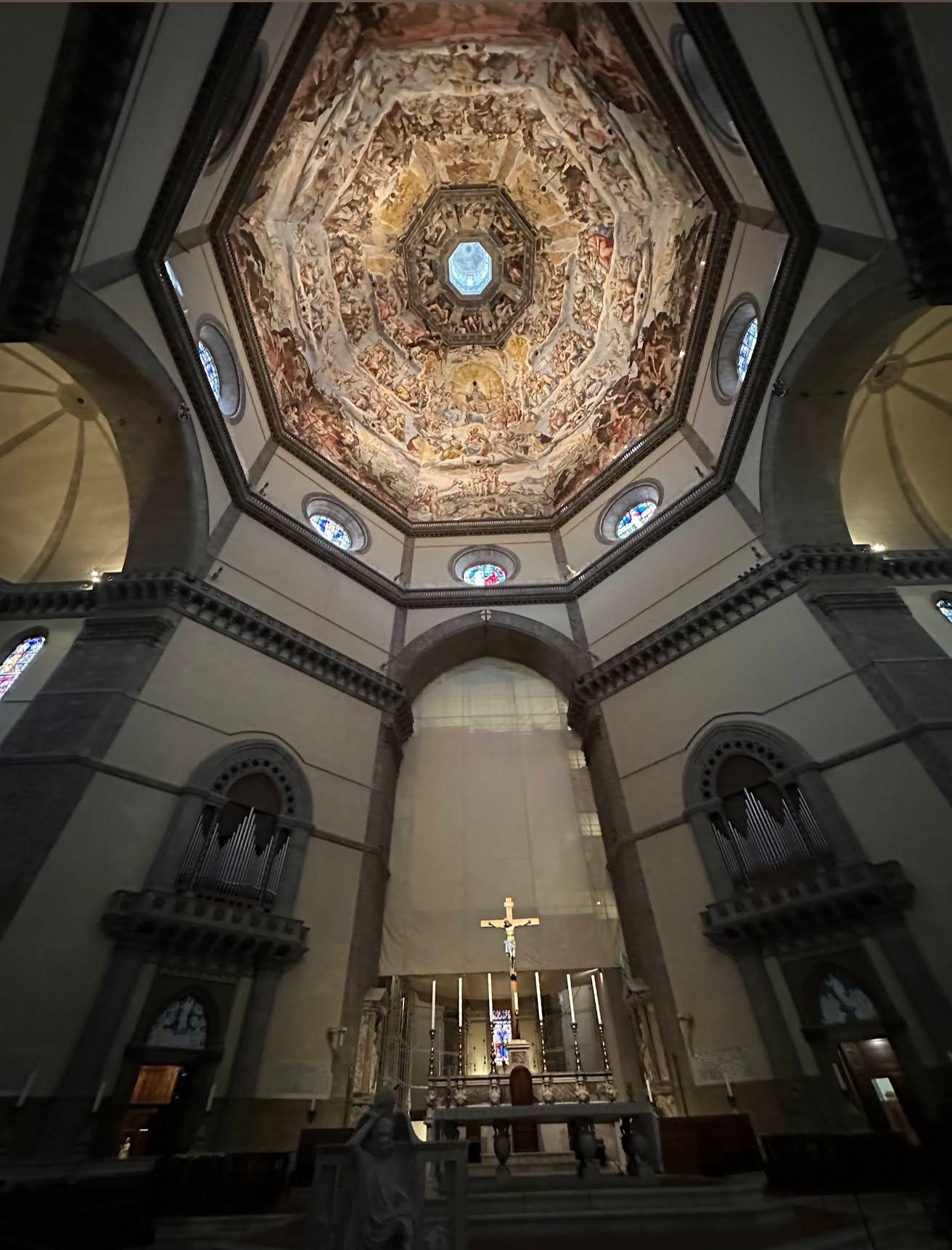
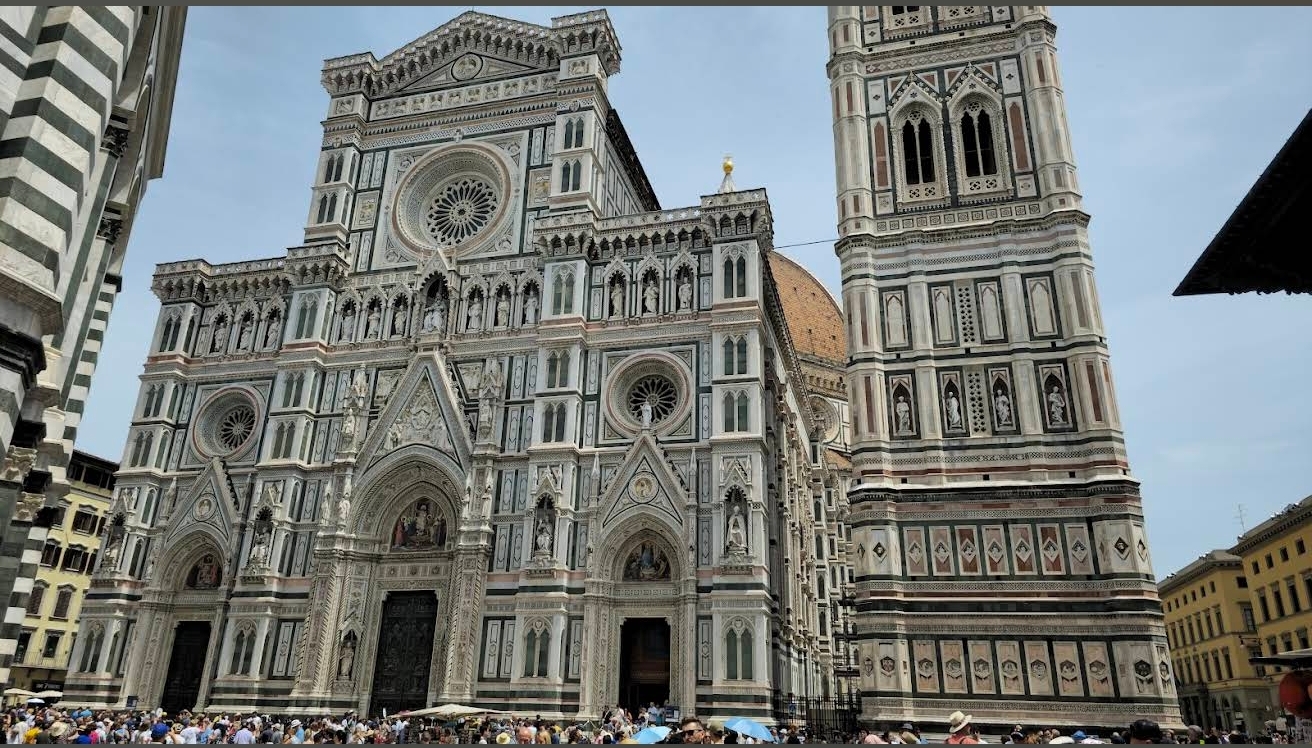
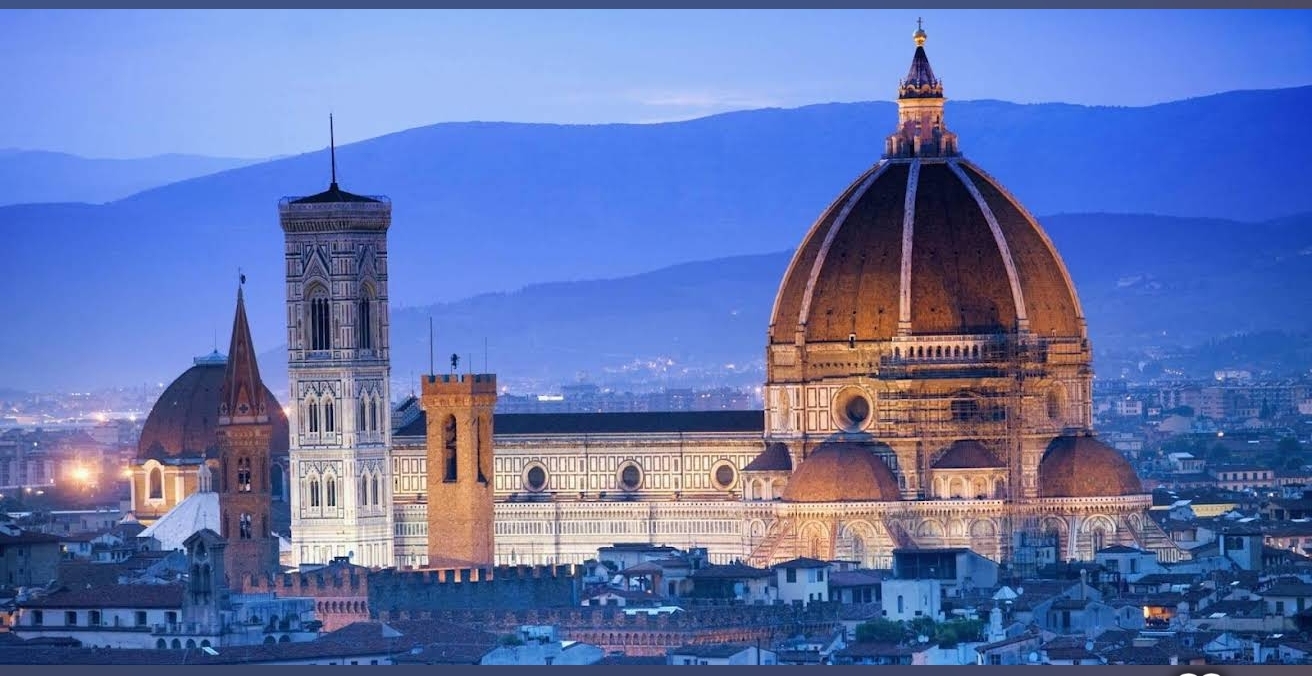
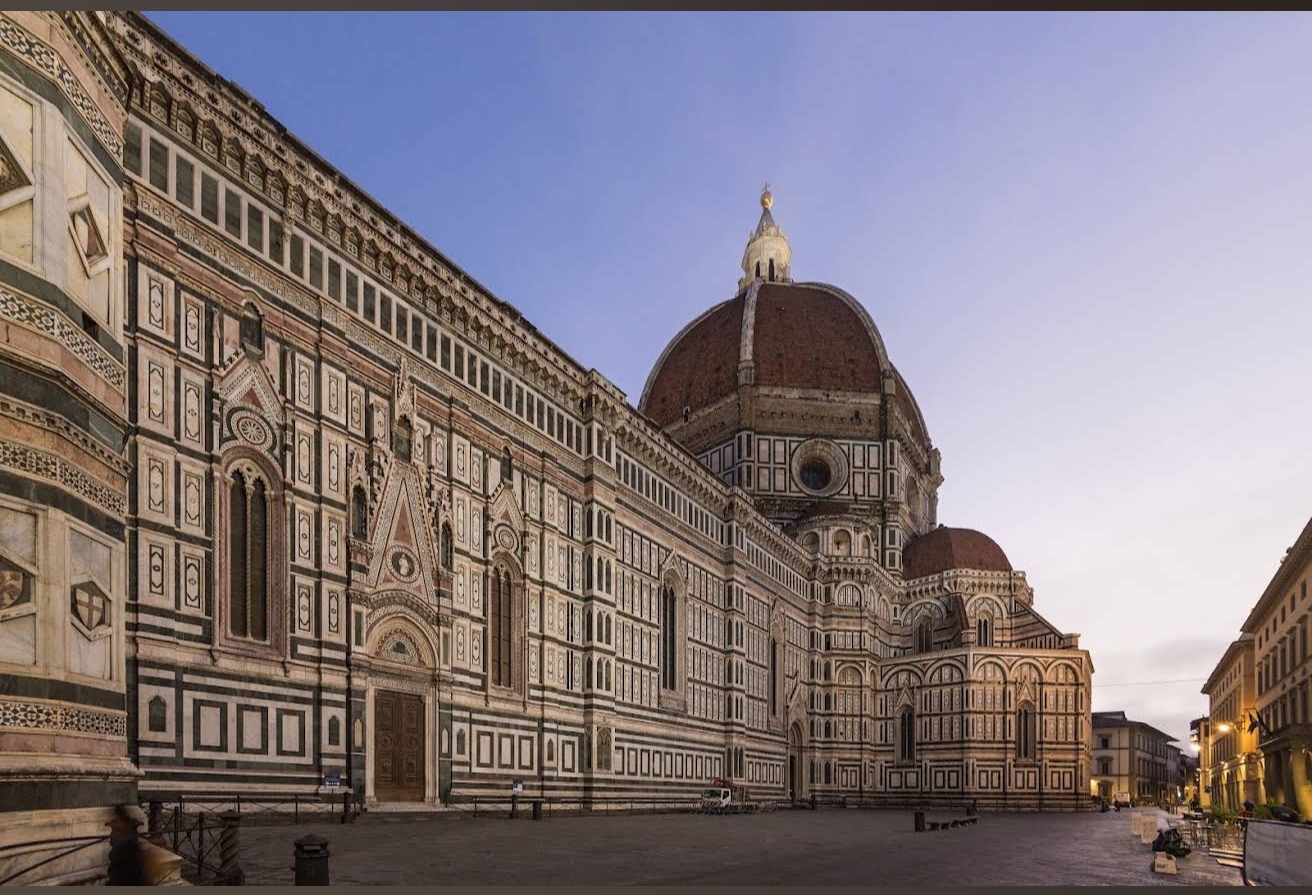
Our starting point is the symbolic and spiritual heart of the city: the Cathedral of Santa Maria del Fiore. Standing before the majesty of the façade and the immensity of the Dome, we do not stop at mere aesthetic impact or visual wonder. We ask ourselves in depth how it was possible, with the knowledge of the fifteenth century, to conceive such a daring structure. We analyze what kind of mindset and courage enabled Filippo Brunelleschi to overcome technical limits that, at the time, seemed absolutely insurmountable for human ingenuity. We observe the Baptistery and Giotto’s Bell Tower not as separate buildings, but as elements of a complex system in which religion, politics, and civic identity merge. Here Florence presents itself as a city that learned to think big, challenging the laws of physics in order to affirm its greatness in the world.
As we continue toward Dante’s district, the atmosphere changes radically. The streets suddenly become more intimate, narrow, and distinctly medieval. We walk together among tower houses and alleyways that still preserve an intense and almost tangible memory of the past. In this part of the tour, we speak about the fierce political tensions between Guelphs and Ghibellines, explore the internal divisions that tore society apart at the time, and reflect on the exile that indelibly marked the life and work of the Supreme Poet. We do not present Dante as an isolated or abstract figure, but as the direct product of a conflicted, unstable, and vibrant city, capable of generating absolute literary masterpieces in the midst of its most painful civic fractures. It is in this contrast between political violence and creative momentum that we seek to grasp the essence of medieval Florence.
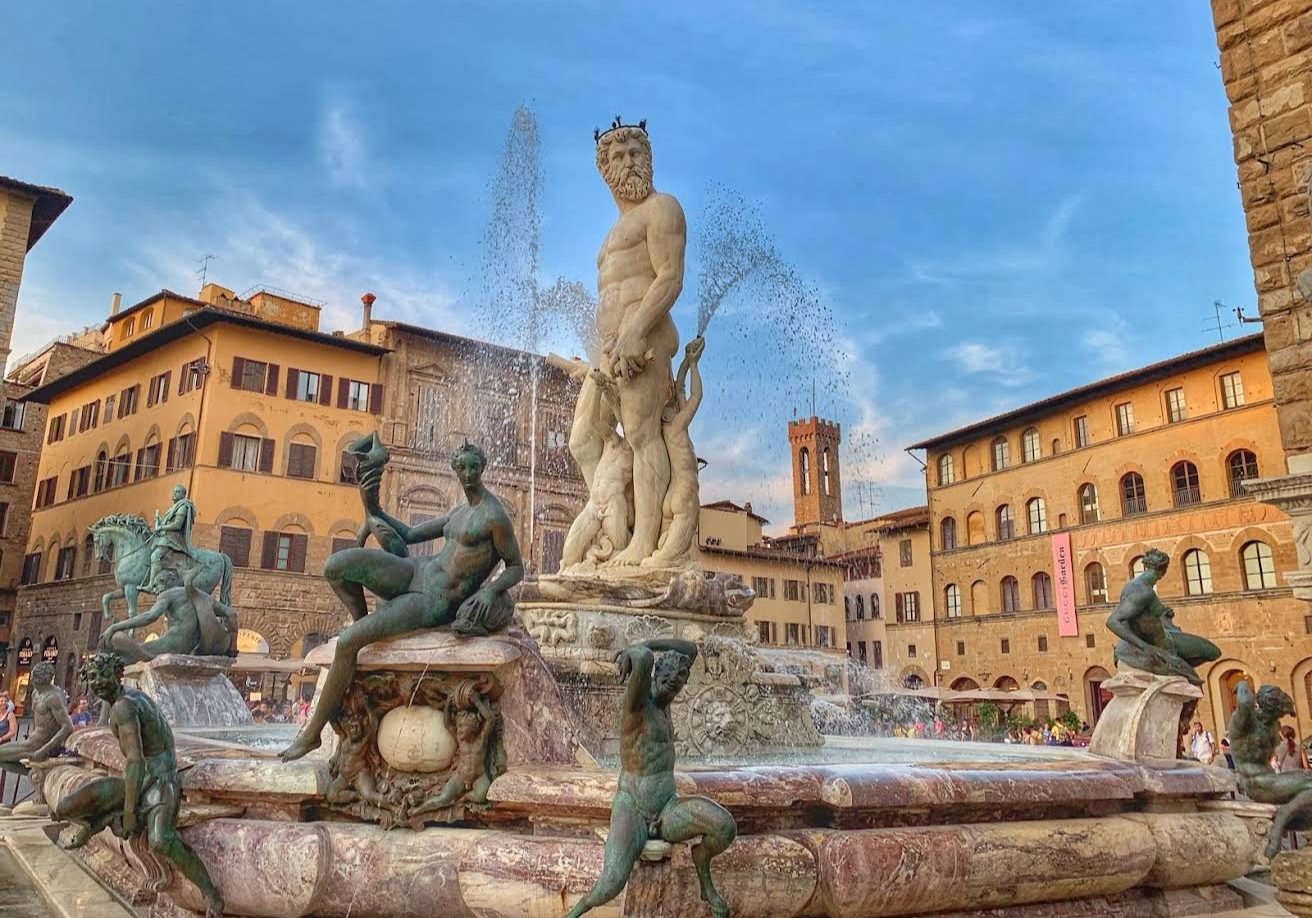
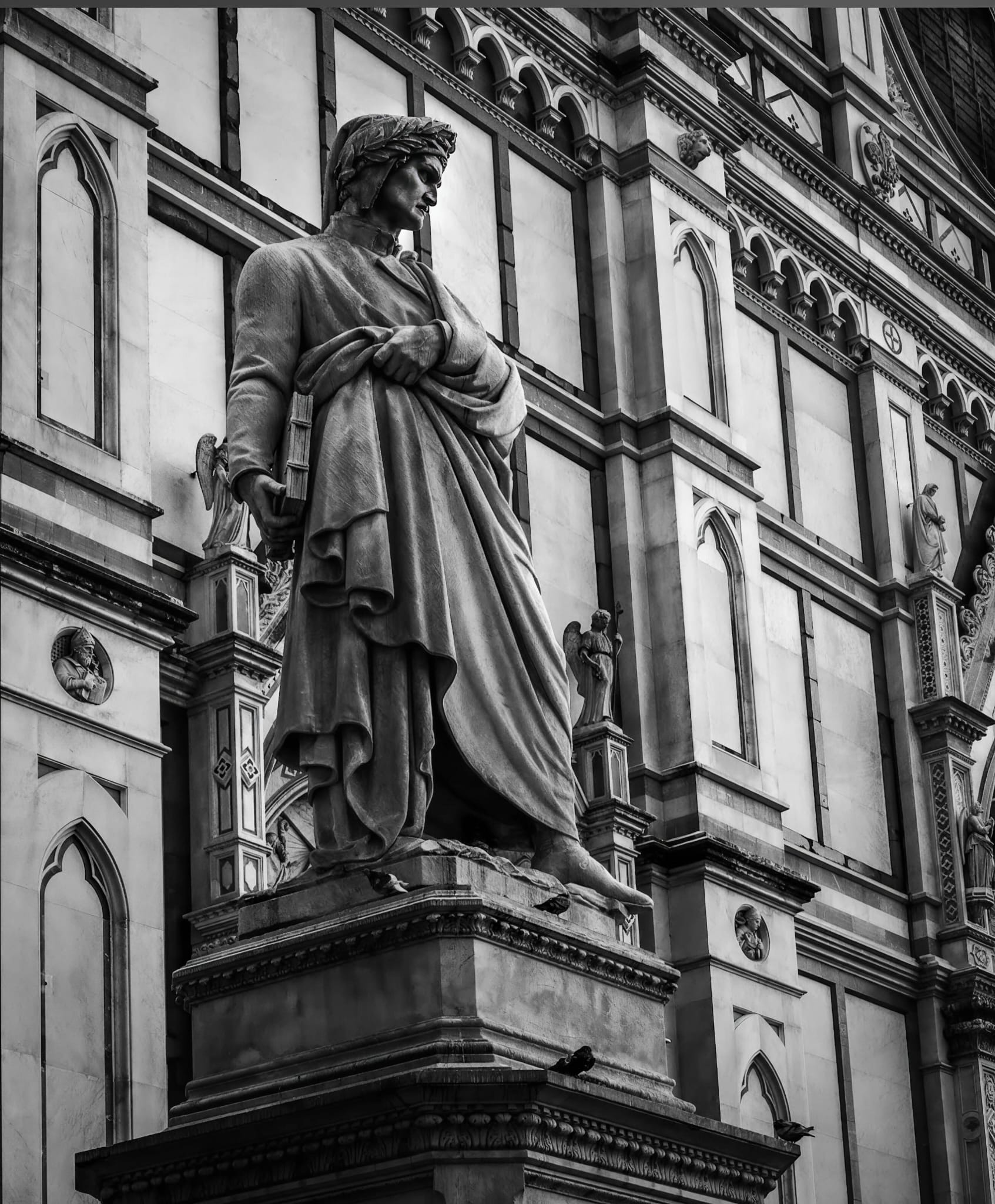
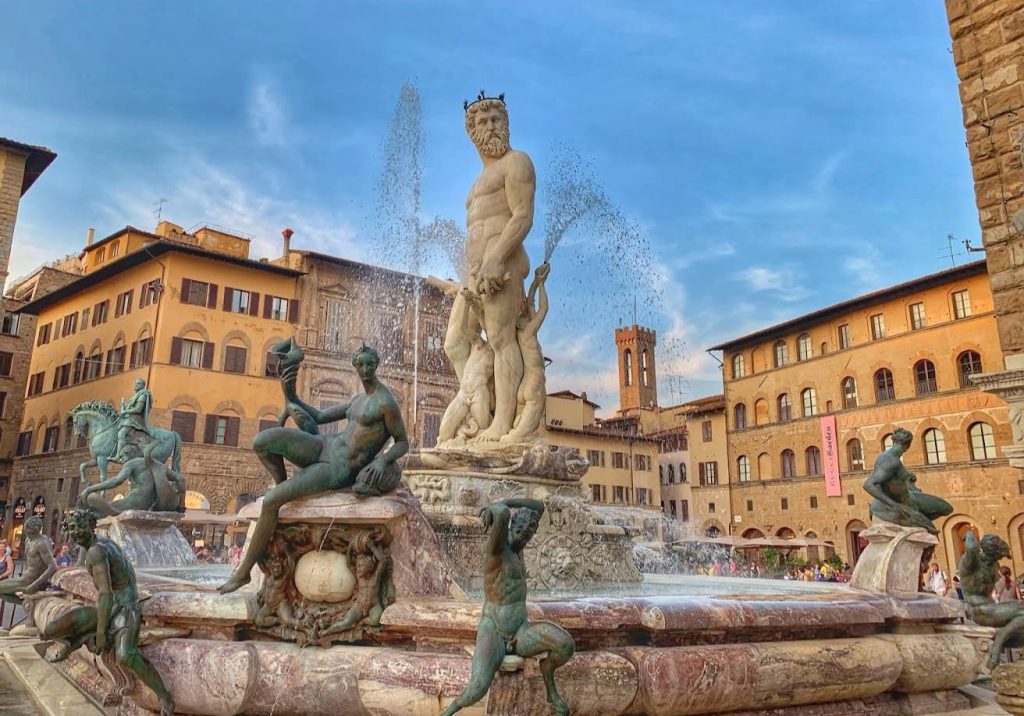
Arriving in Piazza della Signoria, the urban space suddenly opens up and our narrative changes scale, becoming monumental. Here we observe Palazzo Vecchio, interpreting it as the ultimate symbol of republican power and civic freedom. We analyze the statues that populate the square not simply as works of art to be admired, but as actual instruments of political communication. We seek to understand how Florence managed to build its public image through sculpture, transforming art into a refined civic language that everyone could understand. As we walk, we connect historical events, governmental decisions, and ancient rivalries, showing how every corner of this space became the stage for decisive choices that changed the course of history.
Moving toward the Uffizi area, we explore in greater depth the crucial role of the Medici family. We do not consider them simply as generous patrons or lovers of beauty, but as true cultural strategists. We analyze how art was deliberately used to consolidate their internal consensus and the international prestige of the dynasty. In this context, Florence appears not only as a creative city, but as a global financial center, an advanced political laboratory, and the true cultural capital of the age.
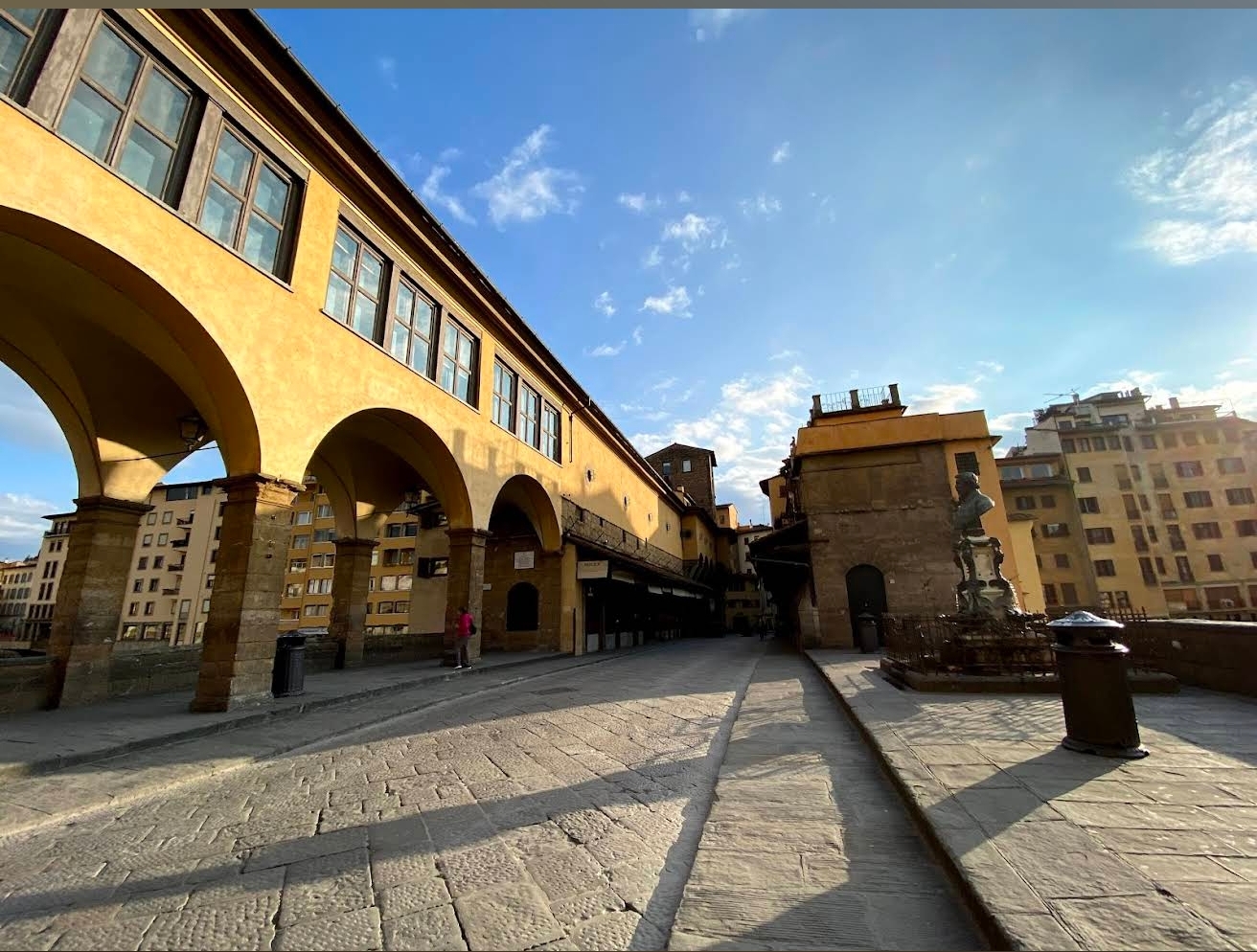
Crossing Ponte Vecchio, we observe the almost magical continuity between the historic economy and modern daily life. For us, the bridge becomes the symbol of Florentine resilience and of its constant capacity for transformation. We watch the Arno flowing and recognize it as the vital axis of the city, the primary geographical element that shaped every aspect of trade, defense, and urban development over the centuries.
As we conclude our route toward Palazzo Pitti, we perceive the clear transition from republican Florence to ducal Florence. Here the dimensions of power change, and architectural ambitions change drastically as well. The palace tells us about another historical phase of the city: that of a magnificent European court, less connected to the old civic laboratory and more projected toward princely grandeur. In this long walk, we have not simply added up places; we have built together the evolution of an entire civilization.
If we choose to add the visit to the David, we enter the Accademia Gallery with a gaze that is now prepared and fully aware. Standing before Michelangelo’s sculpture, we do not limit ourselves to aesthetic contemplation: we analyze every detail, from the proportions to the muscular tension, all the way to the proud gaze of the young hero. We seek to understand the profound political meaning of the work and its fundamental symbolic role for the Florentine Republic of the time. The visit thus becomes more intimate and intense: after reading the city in the open air, we focus on a single marble figure that perfectly synthesizes all its aspirations, strength, and civic pride.
During these three hours together, we maintain a realistic and pleasant walking pace. We walk, observe carefully, and take short but meaningful pauses. We always leave ample room for your questions, clarifications, and connections with the present, because we do not want to provide a dry list of dates and names, but rather to build with you a solid and lasting understanding. By the end of our walk, Florence will no longer be just a collection of iconic images seen in a book, but a readable, clear, and living structure. We will have crossed different eras while maintaining a constant narrative coherence, achieving our true goal: not to see everything superficially, but to truly understand what we have seen.